Seeds are the starting point of every successful farming operation. In modern agriculture, where farmers aim for higher yields, uniform crops, and better resistance to pests and diseases, hybrid seeds play a major role. Over the past few decades, hybrid seed technology has transformed crop production by helping farmers produce more food on the same land with better consistency and market value.
Hybrid seeds are widely used in commercial farming systems across the world. From vegetables and grains to fruits and oilseeds, these seeds are designed to deliver strong performance under controlled and semi-controlled farming conditions. Understanding how hybrid seeds work, their benefits, limitations, and best use cases helps farmers make informed decisions and improve overall farm productivity.
This guide explains everything about the best hybrid seeds in a simple, practical, and farmer-friendly way.
Hybrid seeds are produced by cross-pollinating two genetically different parent plants. Each parent plant is selected for specific desirable traits such as high yield, disease resistance, fast growth, or uniform size. When these plants are crossed under controlled conditions, the resulting seed carries the combined strengths of both parents.
This process is known as hybridization. The first-generation seed produced from this cross is called an F1 hybrid. These seeds are known for their vigor, strong growth, and predictable performance.
Hybrid seed production is carefully managed to maintain quality and consistency, which is why these seeds are usually sold by professional seed companies.
Hybrid seeds are popular because they help farmers meet the demands of modern food systems. Markets require uniform produce, consistent supply, and high quality. Hybrid varieties are designed to deliver exactly that.
One of the biggest reasons for their popularity is higher yield potential. Hybrid crops often produce more per acre compared to traditional varieties when grown under proper management.
Another key factor is uniform growth. Plants grow at a similar rate, mature together, and produce crops of similar size and shape. This uniformity makes irrigation, fertilisation, and harvesting more efficient.
Hybrid seeds are also bred to perform well under intensive farming systems, making them ideal for commercial agriculture.
Hybrid varieties are developed to maximize productivity. With proper inputs such as water, nutrients, and pest control, these seeds can produce significantly higher yields than open-pollinated varieties.
Higher yields help farmers increase income and make better use of land, especially in areas with limited farming space.
Many hybrid seed varieties include built-in resistance to common plant diseases and pests. This reduces crop losses and lowers the risk of large-scale failure.
Disease resistance also helps farmers reduce the number of pesticide applications, saving time and money while protecting crop quality.
Uniformity is a major advantage in market-oriented farming. Hybrid crops usually have similar size, color, and maturity time. This makes them more attractive to buyers, wholesalers, and processors.
Uniform produce also simplifies grading, packing, and transportation.
Many hybrid seeds are designed for fast growth and early maturity. This allows farmers to harvest earlier and sometimes grow multiple crops in a single season.
Early harvests can help farmers reach markets sooner and take advantage of better prices.
Hybrid seeds are also widely used in large-scale field crop production because they provide reliable performance, uniform growth, and higher productivity. These seeds are carefully developed by crossing selected parent plants to combine the strongest traits. For farmers managing large areas of land, this consistency helps simplify crop management and ensures predictable results from planting to harvest.
One of the biggest advantages of hybrid seeds is their high yield potential. Hybrid crops are bred to grow faster, develop stronger roots, and absorb nutrients more efficiently. This leads to increased production per hectare, which is essential for large-scale farming. Crops like maize, rice, and other cereals benefit greatly from hybrid technology, allowing farmers to achieve better returns with the same land and resources.
Hybrid seeds are widely preferred because they offer improved resistance to common pests and diseases. Large-scale fields are more exposed to infestations, which can cause heavy losses. Hybrid varieties help reduce this risk by offering built-in tolerance, minimizing crop damage and lowering the dependence on chemical pesticides. This results in healthier crops and more sustainable farming practices.
Another key reason hybrid seeds are used in commercial farming is their adaptability. Many hybrid varieties are designed to perform well in different climates and soil types. Whether facing drought, heat stress, or variable rainfall, hybrid seeds help maintain stable yields. This adaptability is especially valuable as climate change continues to affect traditional farming patterns.
Hybrid seeds are ideal for mechanized agriculture, which is common in large-scale field crop production. Uniform plant height and synchronized maturity make machine harvesting more efficient and cost-effective. This reduces labor requirements and improves overall farm efficiency, allowing farmers to manage large areas with ease.
Hybrid seeds play a crucial role in meeting global food demand. By increasing productivity and ensuring consistent crop quality, they help large-scale farmers produce more food sustainably. This makes hybrid seeds an essential part of modern agriculture and long-term food security.
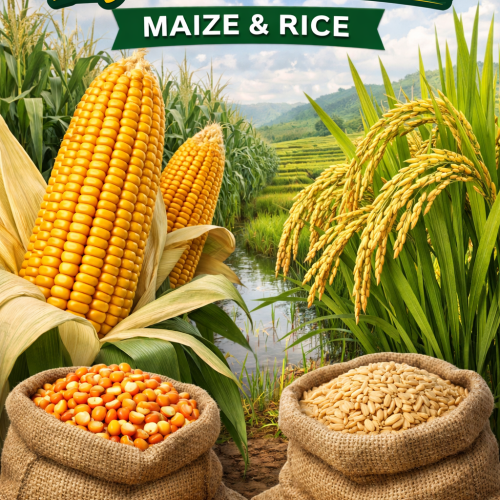
Hybrid maize is one of the most successful examples of hybrid technology in modern agriculture. These improved varieties are developed by carefully crossing selected parent lines to combine the best genetic traits. As a result, hybrid maize delivers high grain yield, strong stalk strength, and better tolerance to environmental stress such as drought, heat, and variable soil conditions.
Farmers prefer hybrid maize because it shows uniform growth and synchronized maturity, which makes crop management and harvesting easier, especially on large farms. Strong stalks help reduce lodging, protecting crops from wind damage and heavy rains. This stability leads to more reliable harvests and reduced yield losses.
Hybrid maize seeds are widely used for food, feed, and industrial purposes across the world. For human consumption, maize is processed into flour, starch, oil, and many daily food products. In animal agriculture, hybrid maize serves as a key ingredient in livestock and poultry feed due to its high energy value. Industrial sectors also rely on maize for producing ethanol, biofuels, biodegradable plastics, and other value-added products.
Overall, hybrid maize supports higher productivity, better profitability, and improved food security. Its adaptability, efficiency, and multiple uses make hybrid maize an essential crop for sustainable and large-scale.
Hybrid rice varieties are developed to increase grain production per acre and improve farming efficiency. These advanced seeds are created by crossing carefully selected parent lines to combine high yield potential, strong plant vigor, and better resistance to stress. Hybrid rice is especially important in regions facing food security challenges, where growing populations and limited farmland require higher productivity from every acre.
One major advantage of hybrid rice is its ability to produce more grains per plant compared to traditional varieties. Strong root systems, efficient nutrient absorption, and uniform growth help farmers achieve consistent yields. Hybrid rice also shows improved tolerance to drought, pests, and common diseases, reducing crop losses and increasing harvest reliability.
With proper management, hybrid rice can significantly outperform traditional varieties in both yield and profitability. Practices such as balanced fertilization, timely irrigation, and effective pest control help unlock the full potential of hybrid seeds. Farmers who follow recommended cultivation techniques often experience substantial yield gains and improved income stability.
Hybrid rice plays a vital role in sustainable agriculture by producing more food using fewer resources. Its adoption supports food security, farmer livelihoods, and long-term agricultural development in rice-growing regions worldwide. This ensures global nutrition security globally
Hybrid seeds perform best when combined with proper farming practices that support healthy growth and maximum productivity. These advanced seeds respond strongly to fertilizers, irrigation, and effective pest management, making crop care an essential factor in achieving high yields. Farmers who follow recommended practices can fully unlock the genetic potential of hybrid crops.
Balanced nutrient application is essential to support fast growth and high yield in hybrid plants. Adequate nitrogen, phosphorus, and potassium help develop strong roots, vigorous foliage, and improved grain or fruit formation. Overuse or imbalance of fertilizers should be avoided, as it may reduce efficiency and harm soil health.
Timely watering plays a crucial role in maintaining plant health and preventing stress during critical growth stages. Proper irrigation ensures consistent moisture supply during flowering and grain development, which directly influences final yield and quality.
Integrated pest management practices work well with hybrid crops and promote sustainable agriculture. Using resistant varieties, biological controls, and targeted chemical applications helps reduce pest damage while minimizing excessive chemical use. This approach supports long-term productivity, environmental protection, and farm profitability.
Overall, combining good agronomy with hybrid seed technology ensures stable yields, lower risks, improved efficiency, and long-term success for modern farmers worldwide.
Hybrid seeds usually cost more than traditional seeds due to the controlled breeding process, advanced research, and strict quality assurance involved in their production. Seed companies invest significant time and resources to develop hybrids with higher yield potential, disease resistance, and uniform growth, which increases their market price.
However, the higher seed cost is often balanced by higher yield, better crop quality, and increased market returns. Hybrid crops typically produce more output per acre, reducing the cost per unit of production. Improved quality also allows farmers to access better market prices, contract farming opportunities, and export markets.
For commercial farmers, overall profitability is usually higher despite the initial investment in hybrid seeds. Strong plant vigor, better stress tolerance, and reduced crop losses contribute to stable income and lower risk. Savings from efficient fertilizer use, irrigation response, and reduced pest damage further improve returns.
It is important to calculate total production costs and expected returns before choosing seed varieties. Farmers should consider seed price, input requirements, yield potential, and market demand. Proper planning helps determine whether hybrid seeds align with farm goals. When managed correctly, hybrid seeds often deliver higher long-term profits and sustainable agricultural growth for modern global farming systems.
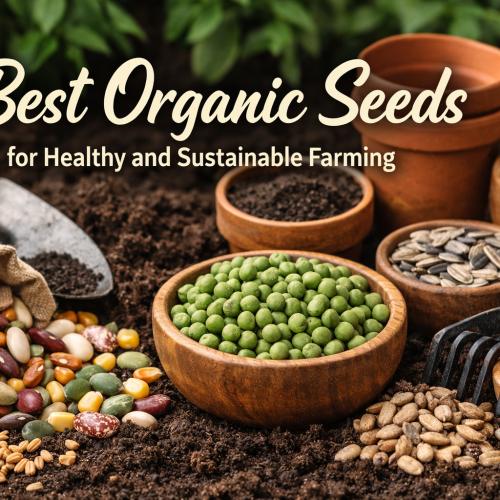
Sustainability is one of the strongest reasons to choose organic seeds. These seeds support farming systems that protect natural resources and reduce environmental damage.
Organic seed farming promotes biodiversity, reduces water pollution, and lowers carbon emissions by minimising synthetic input use.
For long-term farming success, organic seeds help maintain ecological balance while ensuring consistent production.
One important limitation of hybrid seeds is that they cannot be reliably replanted. Seeds saved from hybrid crops usually do not retain the same traits in the next generation.
This happens because the genetic combination breaks down after the first generation. As a result, farmers must purchase new hybrid seeds each season to maintain performance.
This dependency should be considered when planning long-term farming strategies.
Hybrid seeds focus on performance, yield, and uniformity, while traditional seeds focus on adaptability and seed reuse.
Hybrid varieties are ideal for commercial farming systems with access to inputs and markets. Traditional varieties are better suited for low-input farming and seed-saving practices.
Both types have their place in agriculture, and many farmers use a combination depending on crop and purpose.
Modern hybrid breeding programs also focus on climate resilience. Many varieties are developed to tolerate heat stress, drought, or excessive moisture.
This helps farmers manage unpredictable weather patterns and reduce crop losses.
Climate-adapted hybrids are becoming increasingly important as farming conditions change worldwide.
Selecting the right hybrid seeds requires understanding local conditions. Climate, soil type, water availability, and market demand should all be considered.
Farmers should choose varieties recommended for their region and crop season. Reliable seed suppliers and proper labeling are important to ensure seed authenticity.
Testing new varieties on a small area before large-scale planting is a good practice.
Hybrid seeds contribute significantly to global food production. Higher yields and stable performance help meet the growing demand for food.
In regions with limited arable land, hybrid technology allows farmers to produce more from the same area.
This makes hybrid seeds an important tool in addressing food security challenges.
Many contract farming systems prefer hybrid varieties because of their predictable output. Uniform quality helps meet processing and export standards.
Hybrid seeds also support mechanised farming, where uniform plant height and maturity are essential.
Advancements in plant breeding continue to improve hybrid seed performance. Future hybrids will focus on higher efficiency, reduced input requirements, and improved stress tolerance.
Research is also moving toward more sustainable hybrid systems that balance productivity with environmental care.
Hybrid seeds will remain a key part of modern agriculture as farming continues to evolve.
Hybrid seeds have transformed modern agriculture by offering higher yields, uniform crop growth, and improved resistance to pests and diseases. These advanced seeds are developed through controlled breeding to combine the strongest traits of parent plants, resulting in reliable performance across different farming conditions. Hybrid seeds are especially valuable for commercial farmers who aim for consistent production, better crop quality, and stronger market returns.
One of the key benefits of hybrid seeds is their ability to deliver predictable yields. Uniform plant height, synchronised maturity, and enhanced vigour make crop management easier and harvesting more efficient. Improved resistance to common pests and diseases helps reduce crop losses and lowers dependence on excessive chemical treatments, supporting sustainable farming practices.
While hybrid seeds require a higher initial investment and cannot be replanted for the same results, their advantages often outweigh these limitations when managed properly. Higher productivity per acre, better-quality produce, and increased income usually compensate for the higher seed cost.
By selecting the best hybrid seeds suited to local soil and climate conditions and combining them with sound farming practices such as balanced fertilisation, proper irrigation, and integrated pest management, farmers can achieve higher productivity, improved profitability, and long-term agricultural success in competitive markets worldwide.
Agriculture Tool @2026. All Rights Reserved Developed By Raootech