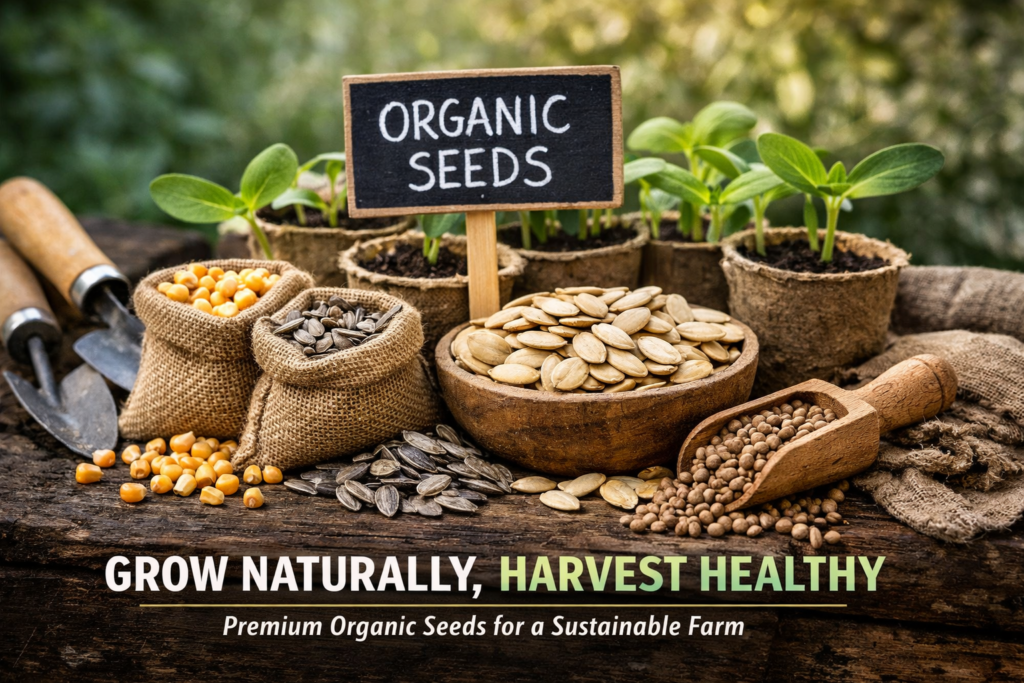
Organic farming begins with one important decision: choosing the right seeds. Among all farming inputs, seeds play the most critical role in determining crop health, soil balance, yield quality, and long-term sustainability. In recent years, organic seeds have gained strong popularity among farmers, gardeners, and commercial growers who want safe, chemical-free, and environmentally responsible crop production. Understanding what organic seeds are, why they matter, and how to choose the best organic seeds can make a significant difference in farming success.
Organic seeds are not just a trend. They represent a return to natural farming principles combined with modern agricultural knowledge. Whether you are a small farmer, a home gardener, or a commercial grower, selecting high-quality organic seeds helps improve soil health, protect biodiversity, and produce healthier food.
This guide explains everything you need to know about organic seeds in a simple and practical way.
Organic seeds are seeds that are grown and processed according to organic farming standards. These seeds come from plants that were cultivated without synthetic fertilisers, chemical pesticides, genetically modified organisms (GMOs), or artificial growth regulators.
Unlike conventional seeds, organic seeds are produced in natural conditions where soil fertility is maintained through compost, crop rotation, and biological methods. The seed plants develop natural resistance to pests and diseases, making them more adaptable to real farm environments.
Certified organic seeds are carefully selected to ensure purity, strong germination rates, and environmental compatibility. This makes them suitable for both organic farming systems and sustainable agriculture practices.
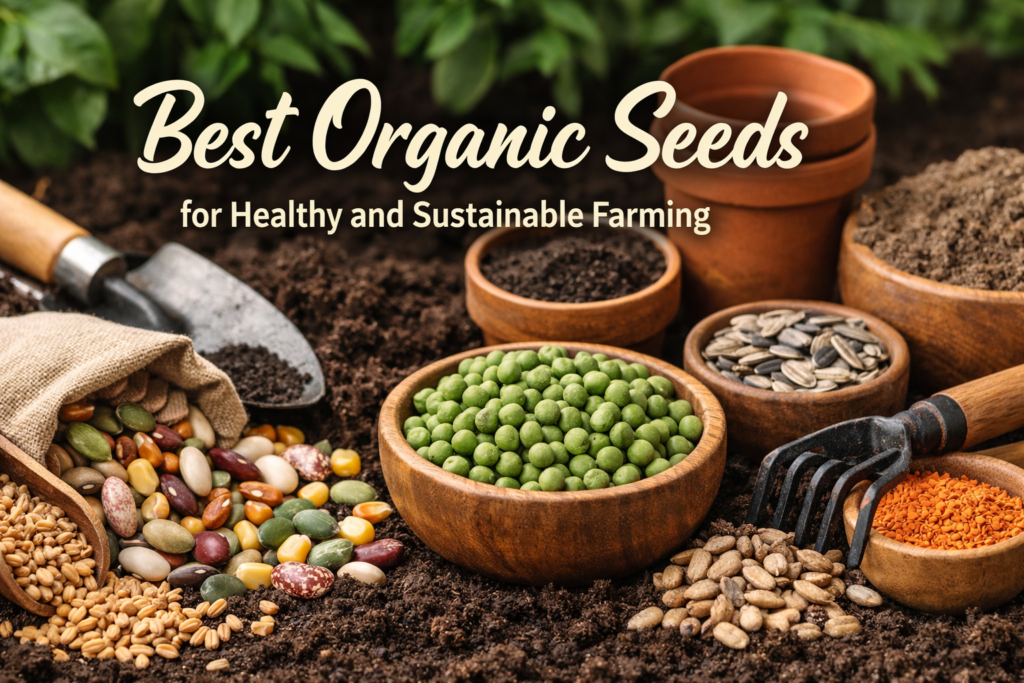
The global demand for organic and naturally produced food continues to rise as consumers become more aware of health, food safety, and environmental sustainability. People now want to know not only how their food is grown, but also where it begins. The foundation of healthy agriculture lies at the seed level. When farmers start with clean, naturally developed seeds, the entire farming process becomes more balanced and environmentally responsible.
Farming systems that work in harmony with nature focus on soil life, biodiversity, and long-term productivity rather than short-term gains. This approach reduces chemical dependency and promotes resilient crop growth, even under changing climate conditions.
One of the most important advantages of naturally produced seeds is their positive impact on soil health. These seeds are developed under chemical-free conditions and are well adapted to living soils. Instead of relying on synthetic fertilizers, they interact naturally with soil microbes, fungi, and organic matter.
Over time, this interaction improves soil structure and increases nutrient availability. Healthy soils retain moisture better, reduce erosion, and support stronger root development. Farmers practicing sustainable agriculture often notice that their land becomes more productive with each season, rather than depleted.
Improved microbial activity also supports natural nutrient cycling, reducing the need for artificial inputs and lowering overall production costs.
Chemical-intensive farming systems often create dependency on fertilizers, pesticides, and treated seed varieties. In contrast, natural farming seeds are bred to perform without chemical coatings or artificial protection. This allows crops to develop natural resistance to pests and diseases.
By reducing chemical use, farmers protect beneficial insects, pollinators, and soil organisms. This balance leads to healthier fields and fewer pest outbreaks over time. Chemical-free farming also minimizes water contamination and protects surrounding ecosystems.
Lower chemical usage means reduced input costs and safer working conditions for farmers and farm laborers.
Modern agriculture relies heavily on a limited number of commercial hybrid varieties. While these varieties offer uniformity, they also increase risk. A single disease or climate shift can cause widespread crop failure when diversity is limited.
Open-pollinated and heirloom seed varieties help preserve genetic diversity. Many of these varieties are locally adapted, meaning they perform well in specific climates and soil conditions. This diversity strengthens food security and makes farming systems more resilient to environmental stress.
Genetic diversity also allows farmers to select and improve crops over time, developing varieties that are better suited to their land.
One of the most practical benefits for farmers is the ability to save seeds. Unlike many commercial hybrids, open-pollinated varieties allow farmers to collect seeds from healthy plants and reuse them in future seasons.
Seed saving reduces long-term costs and provides independence from commercial seed suppliers. Farmers can gradually improve crop performance by selecting the best plants each year. This practice strengthens local agriculture and keeps farming knowledge within communities.
Seed saving also supports small-scale farmers who may not have access to expensive agricultural inputs.
Climate change has introduced new challenges for agriculture, including unpredictable rainfall, extreme temperatures, and emerging pests. Seeds developed under natural conditions are often more adaptable to these changes.
Locally adapted varieties respond better to environmental stress because they have evolved under similar conditions. This adaptability helps maintain stable yields even in difficult seasons. Climate-resilient crops reduce the risk of total crop failure and support consistent food production.
Resilient farming systems are essential for long-term sustainability and rural livelihoods.
Sustainable agriculture focuses on producing food while protecting natural resources for future generations. Natural seed varieties align closely with this goal by promoting biodiversity, soil conservation, and low-input farming practices.
These systems reduce carbon emissions by minimizing synthetic fertilizer use and supporting natural soil carbon storage. Sustainable farming also encourages crop rotation, cover cropping, and biological pest management, all of which contribute to ecosystem health.
As governments and organizations promote environmentally responsible agriculture, the role of naturally developed seeds continues to grow.
Although naturally produced seeds may sometimes have a higher initial cost, they offer significant long-term savings. Reduced chemical inputs, lower fertilizer requirements, and seed saving practices all contribute to improved profitability.
Healthier soils also lead to more stable yields, reducing financial risk. Over time, farmers often find that sustainable practices provide better returns than input-heavy systems.
For small and medium farmers, these benefits are especially important in maintaining long-term viability.
The main difference between organic and conventional seeds lies in how they are produced and treated.
Conventional seeds are often grown using chemical fertilizers and pesticides. Some are treated with fungicides or insecticides before sale, which can harm soil organisms and beneficial insects.
Organic seeds are untreated and chemical-free. They rely on natural resistance and strong genetics rather than external chemicals. While organic seeds may sometimes have slightly lower initial yields, they offer better crop stability, improved soil health, and long-term sustainability.
For organic farming certification, using organic seeds is strongly recommended and, in many regions, required when available.
Choosing the right organic seeds requires more than just buying what looks good on the package. Farmers should consider local conditions and crop requirements.
Climate compatibility is essential. Seeds adapted to your local temperature, rainfall, and soil type will perform better and require less intervention.
Always check the germination rate and seed freshness. High-quality organic seeds should have strong germination and uniform growth.
Look for certification labels when possible. Certified organic seeds follow strict production standards and offer better reliability.
Local organic seed varieties often outperform imported ones because they are already adapted to regional conditions.
Yes, organic seeds contribute directly to better soil health. These seeds are developed under organic conditions and thrive in living soils rich in microbes and organic matter.
When organic seeds are grown without chemical stress, their root systems interact more effectively with beneficial soil organisms. This improves nutrient uptake, water retention, and soil structure.
Over time, farms using organic seeds experience reduced soil erosion, better moisture balance, and improved fertility.
One of the biggest advantages of organic seeds is that many are open-pollinated. This means farmers can save seeds from healthy plants and replant them in the next season.
Seed saving reduces costs and strengthens seed independence. It also allows farmers to gradually adapt seed varieties to their specific land and climate.
However, proper seed selection, drying, and storage are important to maintain seed quality and germination.
Organic seeds develop natural resistance through exposure to real environmental conditions. Instead of relying on chemical protection, these seeds strengthen their defense mechanisms naturally.
This results in crops that are more resilient to common pests and diseases. When combined with integrated pest management practices, organic seeds significantly reduce crop losses.
Healthy plants grown from organic seeds also attract beneficial insects, which help control pests naturally.
Sustainability is one of the strongest reasons to choose organic seeds. These seeds support farming systems that protect natural resources and reduce environmental damage.
Organic seed farming promotes biodiversity, reduces water pollution, and lowers carbon emissions by minimising synthetic input use.
For long-term farming success, organic seeds help maintain ecological balance while ensuring consistent production.
Some farmers believe organic seeds produce lower yields. While this can be true in the short term, long-term studies show that organic systems stabilize yields over time.
Another myth is that organic seeds are weak. In reality, organic seeds are often more resilient because they are not dependent on chemical support.
Organic seeds may cost slightly more initially, but they reduce input costs and improve soil productivity over time.
Home gardening has become increasingly popular as people look for fresh, safe, and reliable food sources. For home gardeners, seed choice plays a major role in determining plant health, taste, and overall success. Seeds developed through natural farming practices are safe to handle, free from chemical coatings, and well suited for home environments where children, pets, and beneficial insects are often present.
Unlike treated seeds, these varieties do not expose gardeners to synthetic chemicals during planting. This makes gardening safer and more enjoyable, especially for beginners who prefer a clean and natural growing experience.
Plants grown from naturally developed seeds tend to establish stronger root systems. Strong roots allow plants to absorb water and nutrients more efficiently, which leads to steady growth and better resistance to stress.
Healthy roots also improve plant stability in containers, raised beds, and rooftop setups. This is especially useful in terrace gardens where soil depth may be limited. Strong early growth helps plants adapt quickly and reduces the chances of early-stage failure.
One of the most noticeable benefits for home gardeners is the quality of the harvest. Vegetables grown from chemical-free seed sources often have better flavor, natural aroma, and higher nutrient content.
Leafy greens taste fresher, tomatoes develop richer sweetness, and herbs produce stronger natural fragrance. This happens because plants grow at a natural pace, absorbing nutrients from living soil rather than relying on artificial inputs. For families growing food at home, improved nutrition is a major advantage.
Kitchen gardens, balcony setups, and backyard plots benefit greatly from natural seed varieties. These plants are usually more adaptable to local conditions and perform well in limited spaces.
Urban gardeners often face challenges such as heat stress, inconsistent watering, and compact soil. Naturally adapted varieties respond better to these conditions and recover more easily from stress. This makes them suitable for containers, grow bags, and raised beds.
Their adaptability also reduces the need for frequent fertilizers or pest control products.
Home gardens are small ecosystems. Naturally grown plants attract beneficial insects such as bees, butterflies, and ladybugs. These insects help with pollination and natural pest control.
A biodiverse garden remains healthier over time and experiences fewer pest outbreaks. Instead of fighting nature, gardeners benefit from balanced interactions between plants, insects, and soil organisms.
This natural balance is difficult to achieve with chemically treated planting material.
Many naturally developed varieties allow gardeners to save seeds from mature plants. This practice reduces gardening costs and creates a sense of independence.
Seed saving also allows gardeners to gradually adapt plants to their specific environment. Over time, crops become more resilient to local weather, soil, and water conditions.
For hobby gardeners, seed saving adds educational value and deepens the connection between people and their food.
Home gardeners often prefer low-maintenance solutions. Naturally adapted plants usually require less intervention once established. Fewer chemicals, less fertilizer, and lower pest pressure all contribute to easier garden management.
Although initial seed costs may be slightly higher, long-term savings from reduced inputs and seed reuse make this option cost-effective.
Proper storage is essential to maintain seed quality. Organic seeds should be stored in cool, dry, and dark conditions.
Moisture and heat reduce germination rates. Airtight containers and proper labeling help preserve seed viability.
Good storage practices ensure strong performance in the next planting season.
As consumers become more health-conscious and environmental regulations become stricter, the demand for organic seeds will continue to grow.
Organic seeds play a key role in climate-resilient agriculture by supporting diverse, adaptable, and low-input farming systems.
Governments and agricultural organisations worldwide are promoting organic seed production to strengthen food security and sustainability.
Choosing the best organic seeds is an investment in healthier crops, stronger soil, and sustainable farming. Organic seeds support natural growth, reduce chemical dependency, and improve long-term productivity.
Whether you are a commercial farmer or a home gardener, organic seeds offer a reliable path toward safe food production and environmental responsibility.
By selecting high-quality organic seeds adapted to your local conditions, you build a farming system that benefits both people and the planet.
Agriculture Tool @2026. All Rights Reserved Developed By Raootech