Drones for crop dusting are changing the way farmers protect crops, apply pesticides, and improve yields. Instead of traditional manual spraying or expensive aircraft, agricultural drones offer a faster, safer, and more precise solution for crop spraying.
With rising labor costs, environmental concerns, and the demand for precision farming, crop dusting drones have become one of the most valuable tools in modern agriculture. Farmers across the USA and globally are adopting drone spraying technology to save time, reduce chemical waste, and improve crop health.
This guide explains everything you need to know about drones for crop dusting, including how they work, benefits, costs, best use cases, and how to choose the right agricultural drone for your farm.
Drones for crop dusting are unmanned aerial vehicles (UAVs) designed to spray pesticides, herbicides, fertilizers, and nutrients over crops with high accuracy.
Unlike traditional crop dusting planes or tractor-mounted sprayers, these drones fly at low altitude and use precision nozzles to apply chemicals only where needed.
They are widely used for:
Pesticide spraying
Herbicide application
Liquid fertilizer distribution
Fungicide treatment
Crop health management
Agricultural spraying drones are controlled through GPS-based flight systems, mobile apps, or automated route planning software.
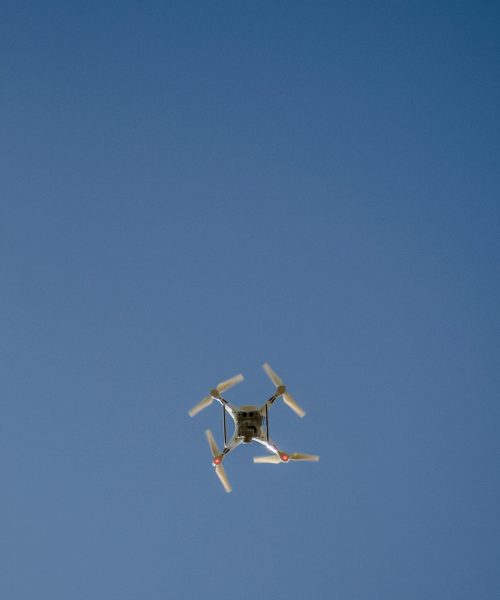
Drones for crop dusting are available in different sizes and payload capacities to match the needs of various farm operations. Choosing the right type depends on farm size, crop density, and spraying frequency.
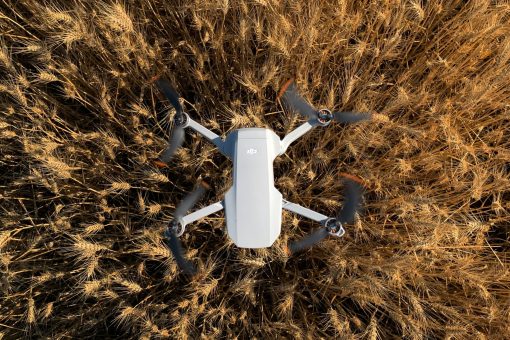
Small crop spraying drones are best suited for small farms, experimental fields, and research plots. These agricultural drones carry a lighter liquid payload and are ideal for targeted spraying in limited areas. They are easy to operate, affordable, and require minimal training. Small spraying drones are commonly used for vegetable farms, nurseries, and precision trials where accuracy is more important than coverage. Their low operating cost makes them a popular choice for farmers entering drone-based crop spraying.
Medium payload agricultural drones are designed for medium-sized farms that require a balance between efficiency and cost. These drones offer wider spray coverage, longer flight times, and better automation features. Medium crop dusting drones are commonly used for crops such as corn, wheat, and cotton. They reduce labor dependency while maintaining precise pesticide and fertilizer application. For most farms, this category provides the best value in terms of performance and return on investment.
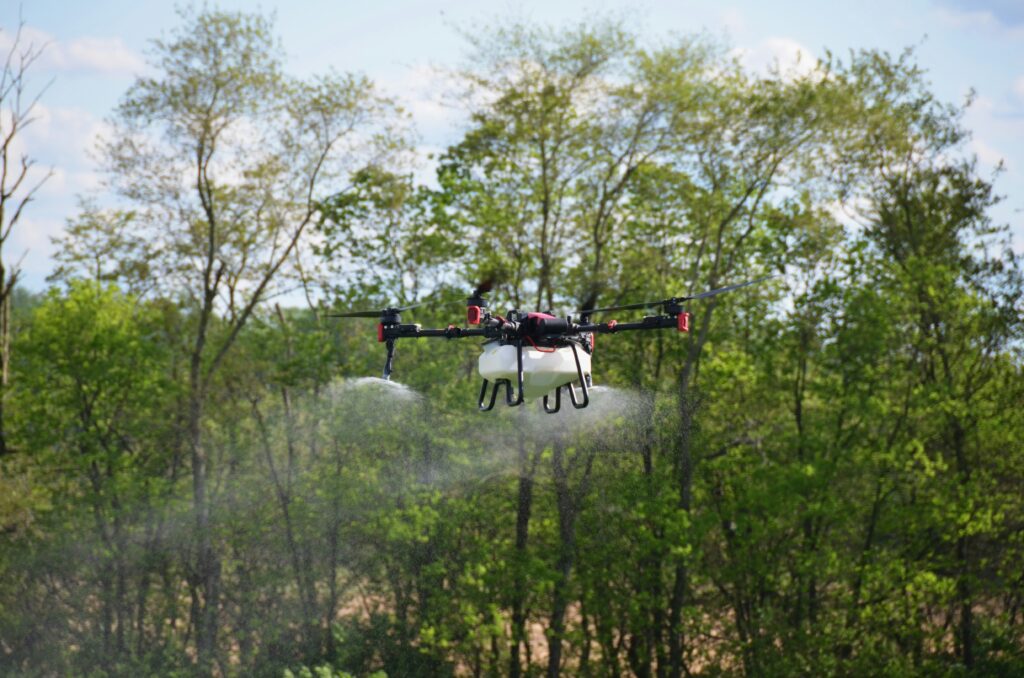
Heavy-lift crop dusting drones are built for commercial farming operations and large-scale agricultural services. These drones support high spray capacity and can cover large acreage in a short time. Heavy-duty agricultural spraying drones are ideal for contract spraying, plantations, and large monoculture fields where speed, volume, and efficiency are critical.
Crop dusting drones are transforming modern farming in the United States by offering precise, efficient, and data-driven spraying solutions. These agricultural spraying drones use advanced technologies such as GPS mapping, intelligent sensors, and automated spray systems to apply fertilizers, pesticides, and herbicides accurately. Understanding how crop dusting drones work helps farmers maximize yields while reducing costs and environmental impact.
The first step in drone crop spraying is field mapping. Crop dusting drones use high-accuracy GPS systems combined with terrain-following sensors to map the entire field. This process creates a detailed digital layout of the farmland, including boundaries, elevation changes, and crop density.
Accurate field mapping ensures that agricultural drones can fly safely at consistent heights, even over uneven land. This step is critical for farms in the USA where large fields and varied terrain require precise navigation to avoid missed areas or overlap during spraying.
Once the field is mapped, specialized drone spraying software creates optimized flight paths. These routes are automatically planned based on crop layout, field size, and application requirements. The software ensures complete coverage while minimizing flight time and battery usage.
Flight path planning also allows farmers to avoid obstacles such as trees, power lines, and irrigation systems. Automated routes reduce human error and make crop spraying drones highly efficient for both small and large-scale farming operations across the United States.
During operation, crop dusting drones release chemicals through automated spray systems equipped with adjustable nozzles. These nozzles distribute pesticides, herbicides, or fertilizers evenly across crops, ensuring consistent application.
Targeted spraying is a major advantage of agricultural drones. Instead of spraying entire fields, drones apply chemicals only where needed. This precision reduces chemical waste, lowers input costs, and helps farmers comply with environmental regulations in the USA.
One of the biggest challenges in traditional crop spraying is chemical drift. Crop dusting drones solve this problem through precision control systems. Advanced sensors regulate spray flow rate, droplet size, and spraying speed in real time.
By controlling these factors, agricultural spraying drones minimize drift caused by wind or altitude changes. This protects nearby crops, water sources, and residential areas while improving application accuracy. Precision control is especially important for farms operating near populated or environmentally sensitive areas.
Many modern crop dusting drones do more than just spray. They also collect valuable crop health and growth data using onboard cameras and sensors. Some drones integrate NDVI imaging to identify stressed plants, pest infestations, or nutrient deficiencies.
This data can be synced with farm management software, allowing farmers to make informed decisions throughout the growing season. Data-driven insights help optimize future spray plans, irrigation schedules, and fertilizer use.
Crop dusting drones apply chemicals only where required. This reduces chemical waste and prevents damage to healthy plants.
Precision spraying can reduce pesticide and fertilizer usage by up to 30–50%, lowering costs and environmental impact.
Drones can cover large areas quickly, especially in fields that are difficult for tractors to access.
One trained operator can manage multiple acres without manual labor.
Drone spraying eliminates direct exposure to harmful chemicals.
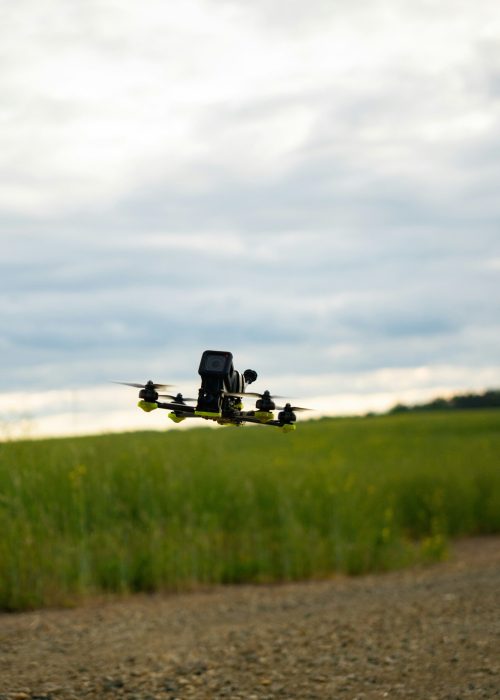
Crop spray drone significantly improve crop yield by enabling targeted spraying of pesticides, herbicides, and fertilizers. Instead of blanket application, drones treat only affected areas, improving pest control and nutrient absorption. This precision approach reduces plant stress, promotes healthier growth, and results in higher yields. Farmers in the USA benefit from better productivity while using fewer inputs throughout the growing season.
Agricultural spraying drones support eco-friendly farming by minimizing chemical runoff and overspray. Precise droplet control ensures that chemicals stay on crops rather than spreading to soil, water sources, or nearby vegetation. This reduces environmental damage and helps farmers comply with sustainability standards and environmental regulations increasingly enforced across the United States.
One major advantage of crop dusting drones is their ability to operate in areas where traditional machinery cannot. Drones can easily spray crops on hillsides, wet fields, uneven terrain, and narrow plots. This capability allows farmers to protect crops in challenging environments without soil compaction or equipment damage caused by heavy tractors.
Drone spraying systems deliver consistent application by maintaining uniform droplet size and spray pressure. Automated controls ensure equal coverage across the entire field, preventing under- or over-application. This consistency improves treatment effectiveness and reduces chemical waste, making agricultural drones a reliable solution for precision farming.
Advanced crop dusting drones integrate with precision agriculture systems, collecting valuable data on crop health, growth patterns, and field conditions. This data-driven approach enables smarter farming decisions, optimized spray schedules, and long-term yield improvement for modern farms in the USA.
Drones for crop dusting are widely used across many crop types due to their precision, efficiency, and ability to operate in challenging field conditions. These agricultural spraying drones provide uniform pesticide, herbicide, and fertilizer application without damaging crops or compacting soil.
Row crops such as corn, wheat, rice, cotton, and soybeans benefit greatly from drone crop spraying. These crops are planted in structured rows, allowing spraying drones to follow accurate GPS-guided flight paths. This ensures even coverage and reduces chemical waste while improving pest and disease control. Drone spraying is particularly effective during early growth stages when ground equipment may harm plants.
Tall and dense crops like sugarcane are difficult to treat using traditional sprayers. Crop dusting drones easily fly above dense canopies and deliver targeted spraying, improving penetration and treatment efficiency without physical contact.
Vineyards and orchards are another ideal use case for agricultural drones. The precise control of spray volume and droplet size helps protect vines and fruit trees while minimizing drift. This is especially valuable in high-value crops where chemical overuse can reduce quality.
Vegetables and fruit crops also benefit from drone spraying technology. Small, irregular plots and high-density plantations can be treated efficiently with minimal labor. Overall, drones for crop dusting offer superior performance in both row crops and high-density agricultural systems, making them a practical solution for modern precision farming.
Choose a drone that can carry enough liquid for your farm size.
Longer flight time reduces refilling and downtime.
Wider spray coverage increases efficiency.
Automated flight planning ensures accuracy and safety.
Reliable after-sales support is essential for long-term use.
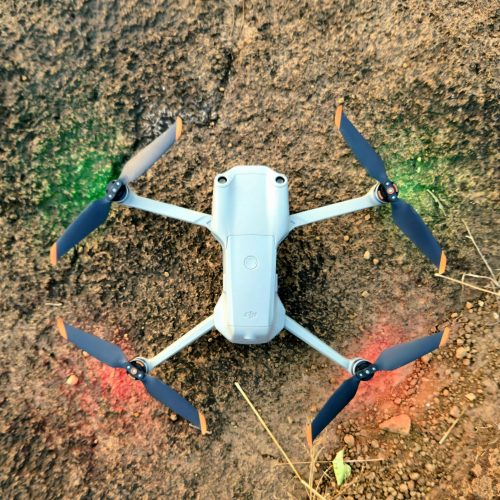
Proper maintenance is critical to ensure crop dusting drones perform efficiently and have a long operational lifespan. Farmers and agricultural service providers in the USA who invest in precision agriculture drones can maximize returns by following routine maintenance practices that improve reliability, reduce downtime, and maintain spray accuracy.
Cleaning the spray nozzles after every operation is essential. Residue from fertilizers, herbicides, or pesticides can clog nozzles and affect spray patterns. Regular cleaning ensures even chemical distribution, reduces over-spraying, and supports precision crop spraying. Using water or approved cleaning solutions, operators should flush the nozzles thoroughly after each application.
Calibration is key to maintaining the correct flow rate and droplet size. Farmers should regularly calibrate their agricultural spraying drones to ensure chemicals are applied at the proper dosage. Accurate calibration helps reduce chemical waste, lowers operational costs, and protects the environment by preventing overuse.
Drone batteries are sensitive and require proper storage. After each use, remove batteries and store them in a cool, dry place. Avoid extreme temperatures to prolong battery life and prevent performance issues. Regular battery checks before each flight are recommended to ensure sufficient charge and safe operation.
Handling pesticides, herbicides, and fertilizers requires strict adherence to safety guidelines. Wear protective gear, follow label instructions, and ensure chemicals are stored safely. Proper safety practices reduce health risks and prevent environmental contamination, which is crucial for sustainable farming in the USA.
Regular inspection of propellers, motors, and other mechanical components ensures smooth operation. Look for signs of wear or damage and replace parts as needed. Well-maintained motors and propellers improve flight stability, extend drone lifespan, and maintain consistent spray coverage.
Routine maintenance of crop dusting drones not only increases lifespan but also ensures consistent performance. Well-maintained drones provide precise spraying, reduce downtime, and maximize the efficiency of modern precision agriculture operations. Following these maintenance tips helps USA farmers protect their investment while supporting eco-friendly and high-yield farming practices.
Crop dusting drones have revolutionized modern farming in the USA, providing farmers and agribusiness owners with efficient solutions for precision agriculture. Beyond improving crop health and yields, these drones present multiple business and monetization opportunities. Many farmers use crop dusting drones as contract spraying services, providing chemical application for other farms in their region. Others operate custom application businesses, offering tailored spraying solutions based on crop type, field size, and pest or nutrient requirements. Additionally, drone rental services allow farmers to earn income by leasing their agriculture sprayers to small-scale farmers or agribusinesses that cannot afford to purchase drones outright.
These operational models open strong avenues for affiliate marketing and additional revenue streams. Drone sales remain a lucrative opportunity, especially with the growing demand for precision agriculture drones. Farmers and service providers can also profit by selling accessories, including extra spray nozzles, replacement batteries, GPS modules, and protective gear.
Another high-demand area is training programs. As more operators enter the industry, certified courses for safe and effective drone operation are becoming essential. Offering agriculture drone training can generate recurring revenue while promoting responsible use.
Software tools for route optimization, crop health monitoring, and spray tracking also present monetization potential. Many agribusinesses subscribe to farm management software integrated with drones, ensuring efficient planning and precise chemical application. Selling or recommending these tools through affiliate programs is a viable income source.
Finally, maintenance services are critical. Regular upkeep, including cleaning spray nozzles, inspecting motors and propellers, and battery maintenance, is necessary for reliable operation. Providing maintenance support to other drone operators ensures steady business while helping farms maximise productivity.
Platforms like agriculturetool can help farmers discover the best agriculture sprayers and drones, creating opportunities to link products and services for affiliate income. By leveraging crop dusting drones for contract services, rentals, sales, training, software, and maintenance, modern farmers can create multiple income streams while supporting sustainable, efficient farming practices across the USA.
As precision agriculture drones gain popularity across the USA, farmers often ask questions about legality, efficiency, and profitability. Understanding these key points helps agricultural professionals adopt drone crop spraying with confidence.
Yes. Crop dusting drones are legal when operated according to local aviation and agricultural regulations. In the USA, operators must comply with FAA Part 107 rules and obtain any necessary pesticide application certifications. Following these regulations ensures safe and responsible agricultural spraying drone operations while avoiding fines or penalties.
In many cases, drones can effectively replace traditional tractors and manned aircraft for crop spraying. Agricultural spraying drones are particularly advantageous for small to medium farms where traditional machinery may be too costly or inefficient. Drones provide precision spraying, reduce chemical use, and improve coverage in difficult terrains.
The coverage depends on the drone model, tank capacity, and field conditions. Most modern crop dusting drones USA can spray anywhere from 20 to over 100 acres per day. High-capacity drones designed for commercial operations can handle even larger areas efficiently, making them suitable for both small farms and large agricultural enterprises.
No. Unlike traditional machinery, drone crop spraying is contact-free. Drones fly above crops at controlled heights, preventing trampling or mechanical damage. Precision flight paths ensure chemicals are applied evenly while protecting delicate plants and maximizing yield.
Yes. Many farmers report a strong ROI on agricultural drones within one to two seasons. Reduced labor costs, lower chemical usage, faster application, and improved crop yields all contribute to profitability. Investing in precision agriculture drones can significantly reduce operational costs while supporting sustainable farming practices.
Drones for crop dusting are no longer a luxury—they are becoming a necessity in modern agriculture. They offer unmatched precision, cost savings, and environmental benefits.
For farmers looking to increase yields, reduce chemical usage, and embrace smart farming, agricultural spraying drones are one of the best investments available today.
As technology advances, crop dusting drones will continue to shape the future of sustainable and profitable farming.
Agriculture Tool @2026. All Rights Reserved Developed By Raootech